
Inalienable Labor
Work That Wounds

“Habit, skill: a transference of the consciousness into an object other than the body itself. May this object be the universe, the seasons, the sun, the stars.”
-Simone Weil, “Meaning of the Universe”
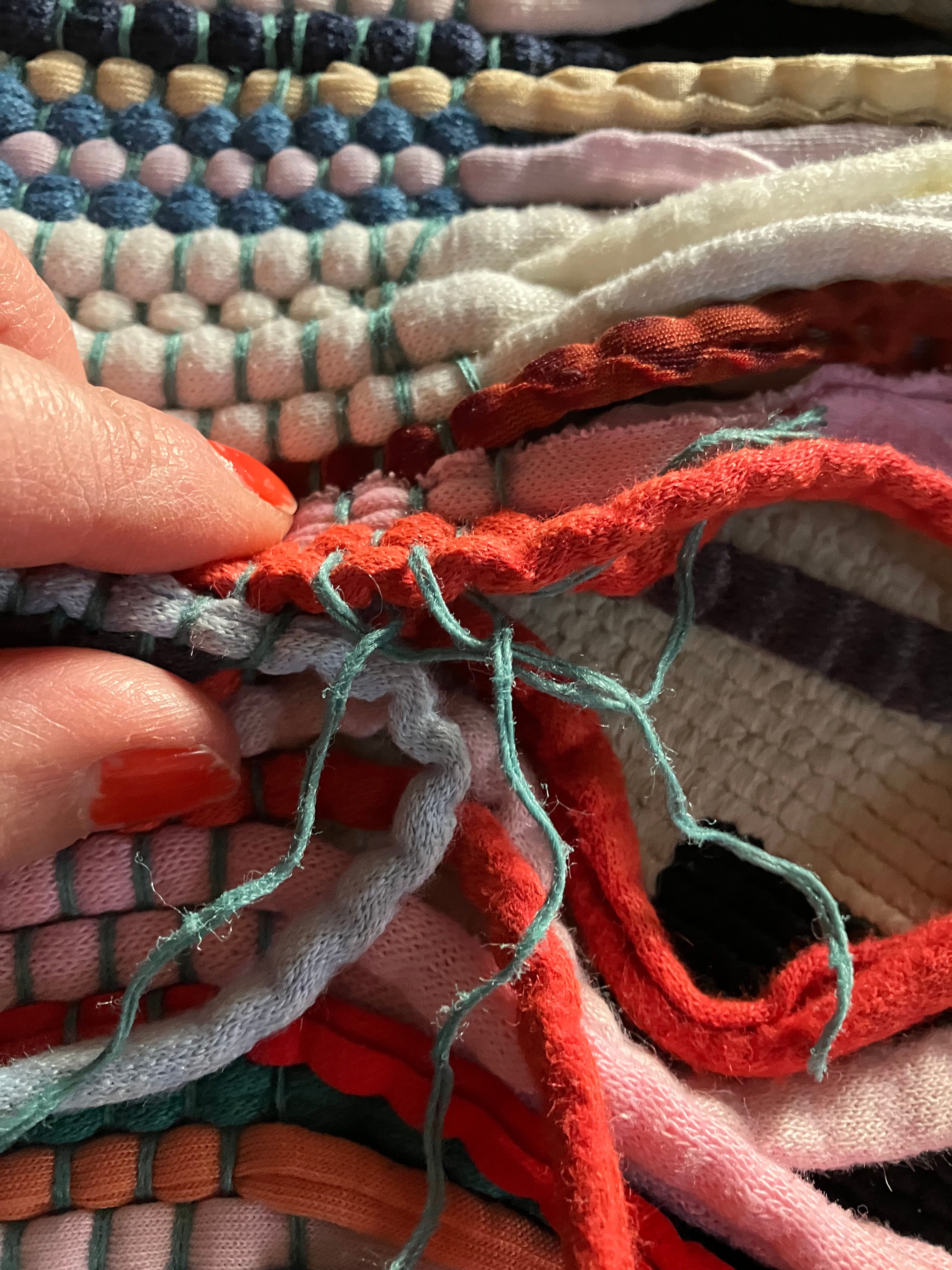
Down in the basement I finger the fibers of a homemade rug inherited from my Nana, now unraveling. I have no idea how to stop this once lovely piece from coming to pieces. My auntie texts me that it’s worth it cuz there aren’t a whole lotta people who do that kind of thing anymore ya know? But can I learn? If the keepers of this art are passing away, who will teach me?
Around the corner is a dryer we acquired for free. We were told it worked, but it lies silent. Can it be fixed? What will happen if I try? What won’t happen…if I don’t? I grow impatient with broken things so easily. My inclination is to toss them and start over but something about my attitude started rubbing me the wrong way, and so I’ve begun embracing what I’m loosely dubbing Repair Culture.
Some of us have the luxury of asking what kind of work is worth my time? Or, what will I pay to have done? Should I just go buy a new one? Occasionally we even have the presence of mind to ask do I need one at all?
Work can devastate a body. When I was in Haiti many years ago for a service trip, we saw humans doing the work of donkeys, pulling carts that towered with cargo. When asked how they could bear up against this sort of labor we were told that these people had an average life expectancy of seven years from the time they took up this sort of thing. The clock began ticking as soon as they picked up the handles.
Work leaves its wounds.
Alienated Labor

Somewhere along the line in human history, we went from using tools ourselves to giving our bodies over to being the tool in the hand of Something Else. That Something Else might be the textiles factory near our old apartment on Avenue des Gobelins in Paris where you would have been just another a shuttlecock in the great loom in the 1800s. Or it might be the iPhone over there on my desk I thought I was using but I’m increasingly suspicious that it’s using me. In any case, beautiful things now happen inexpensively and at great human cost. Right around the same time that Gobelins was moving from medieval hand-woven techniques to industrial machines and America was just fifteen years shy of Lincoln’s Emancipation Proclamation which would free Black slaves from their own position as cogs in the American wheel, Karl Marx was working on an important idea. He was starting to see the dramatic effects of industrialism, or “political economy” as he calls it:
Political economy conceals the estrangement inherent in the nature of labor by not considering the direct relationship between the worker (labor) and production. It is true that labor produces for the rich wonderful things – but for the worker it produces privation. It produces palaces – but for the worker, hovels. It produces beauty – but for the worker, deformity. It replaces labor by machines, but it throws one section of the workers back into barbarous types of labor and it turns the other section into a machine. It produces intelligence – but for the worker, stupidity, cretinism.
Even if you’re on the side of the machines and supposedly #winning, you end up alienated. Doubly so, in fact. First, you have no connection to the object you made. It’s neither for your use nor a gift, both of which are anchored in real human homes or friendships. Second, you are not connected to your actual activity because on an assembly line, for example, there is one insignificant motion you perform. You have become one thing: a dispenser of units of energy. So, you are estranged from both the thing you made and also your own self as a human being.
I think we can all agree that this is not a happy state of affairs.
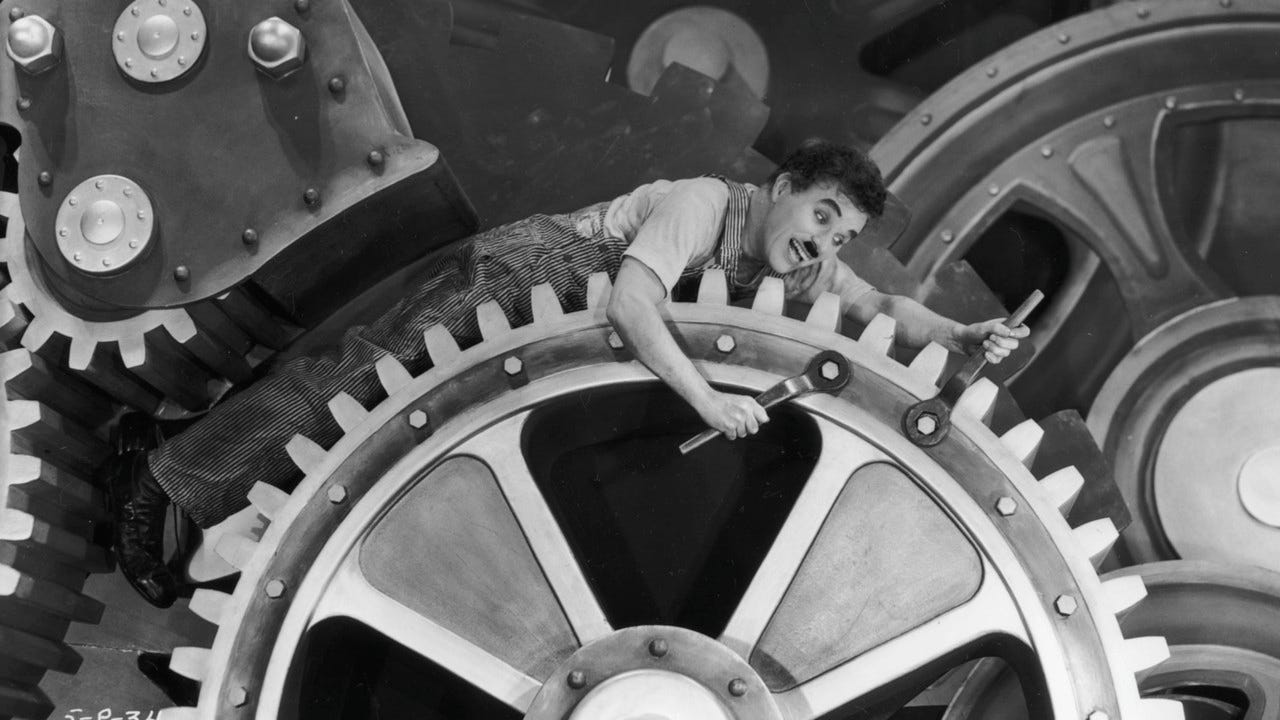
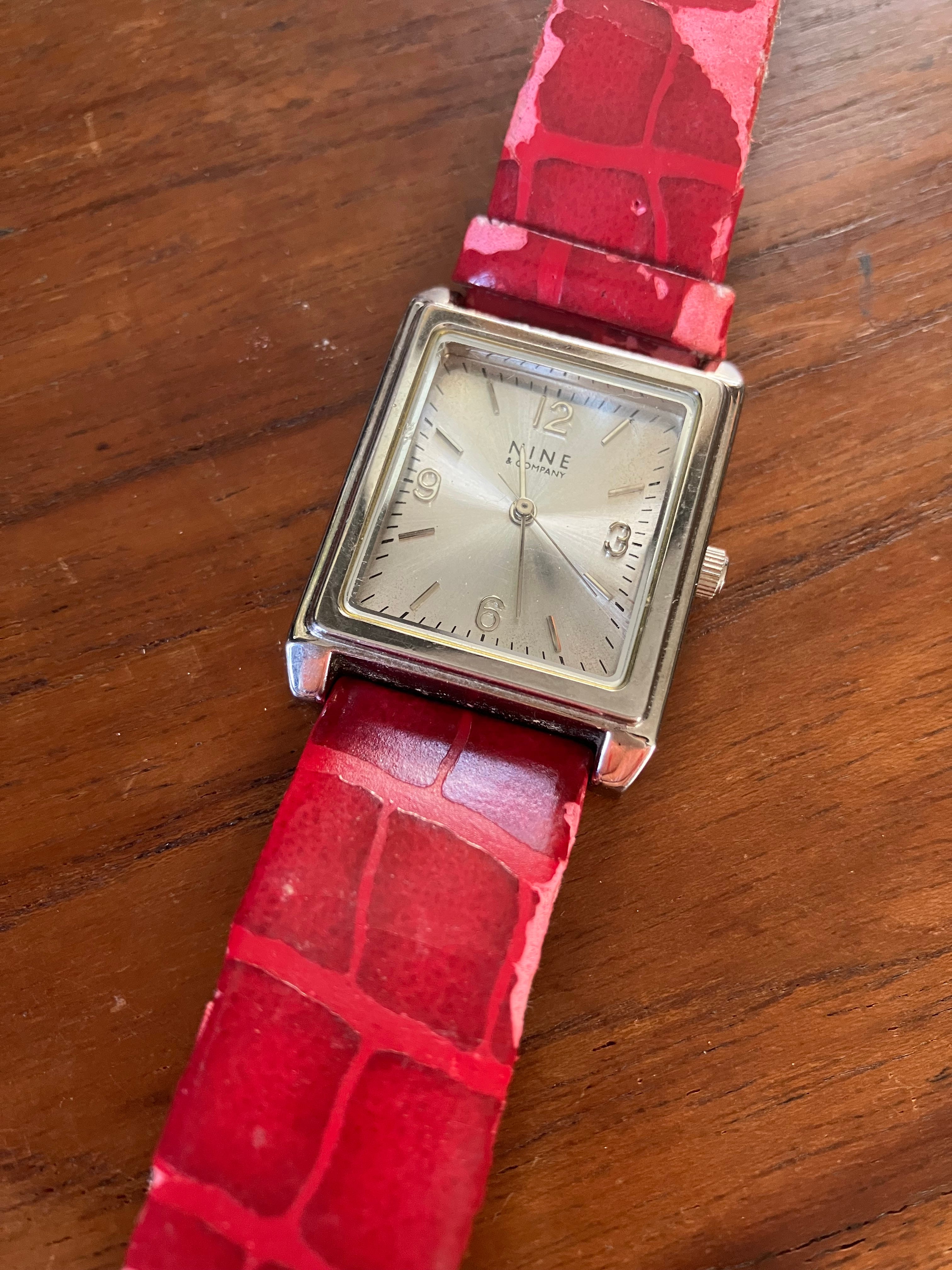
Which is why I’ve felt the urge to think of ways to take things off the assembly line, one by one, and try to make or fix them myself. For instance, I’ve wanted a regular old watch for keeping time for a while. (This is an ironic example if you’ve seen Charlie Chaplin’s Modern Times, since he eventually gets transformed into a ticking timepiece himself!) I have two watches with dead batteries in my jewelry box, and that’s where the conversation in my head has ended for the past seven or eight years. As it happens, I read one day recently on
’s that their son had acquired a watch repair kit and was ready to replace all the batteries in the neighborhood. I don’t have the luck of being this enterprising young man’s neighbor but it turned a light on in a new room in my mind. I already have a watch. (Two, in fact.) And with a couple of quick video tutorials, I had the back of one of them popped open, found a place nearby that sold the right replacement, and walked down to grab it. Soon I was able to glance at the hour again via a lovely little watch that was a present from my husband in our early years. (Next step is to replace the wristband!)Recognition
If there is a lack of skill that separates us from good work and therefore our humanity (and through industrial forms of work, others from those things, too) it seems that we need some strike of a match, a story that someone tells that makes us wake up and realize that we can do it.
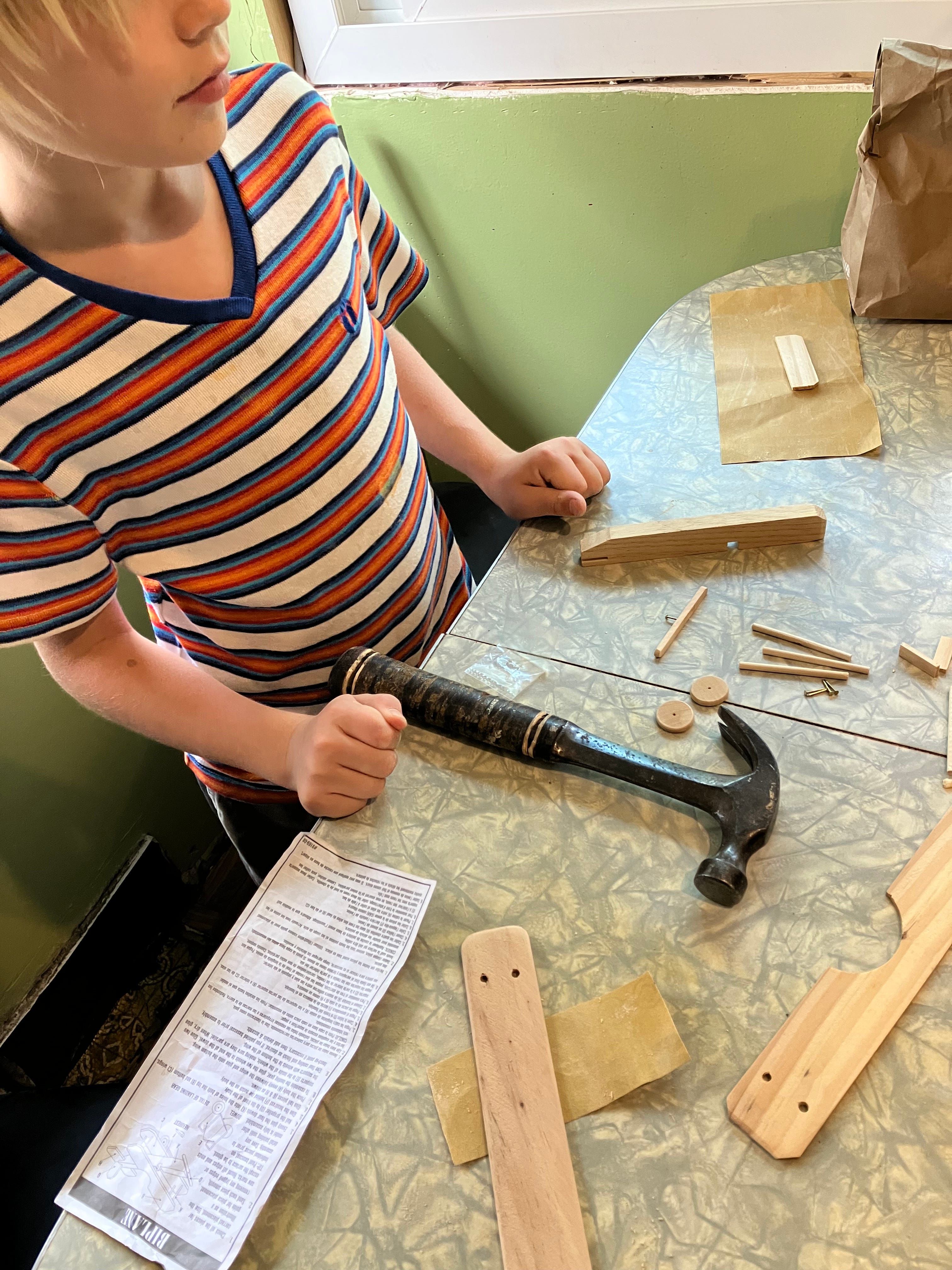
This moment of recognition is not unlike the pattern of discovery we have as children which leads to the working up of a habit or skill. My four-year-old now will catch glimpses of letters — his favorites being the ones from his name of course. (Don’t we always start with ourselves?) His utter delight in recognizing something familiar and strange simultaneously is something like this light turning on. I am rereading Annie Dillard’s An American Childhood and she describes this transition from ignorance to knowledge as only she can — with zero sentimentality:
The interior life is often stupid. Its egoism blinds it and deafens it; its imagination spins out ignorant tales, fascinated. It fancies that the western wind blows on the Self, and leaves fall at the feet of Self for a reason, and people are watching. A mind risks real ignorance for the sometimes paltry prize of an imagination enriched. The trick of reason is to get the imagination to seize the actual world — if only from time to time.
Her bluntness is invigorating, bracing. I do feel this way, about many things — as if I’ve been waked from a dream. How many hundreds of thousands of people in the world already knew how to change a watch battery — was I the only one who didn’t? I think this realization is what Simone Weil means when she defines habit or skill as a transference of the consciousness into an object other than the body itself. That transference begins with a Recognition.
What I haven’t told you yet is that I also tried to open the second watch and its mechanism required a special tool (presumably the one in Ruth’s son’s kit) to rotate the back as opposed to popping it open. In my zeal to try to make-do with what I had, I ended up gouging my hand with a flathead screwdriver. I can still feel the bruise and it reminds me to seek out the right tool. And maybe one more knowledgeable than I.
Work leaves its wounds.
Recently I wrote about our family’s discovery of the Repair Room where we go to find some more use from household items. These people gave me the gumption to learn how to darn holes, resew my sandals, and even try fixing the aforementioned dryer in the basement. The inspiration starts in the rented back room of the local library, but it doesn’t remain there. The match has been struck, the candle brings a light, and now it’s passing from project to problem to project, like the flame passed down the aisle at church on high holidays.
Meanwhile, back in the shadowy corner of the basement, I squint at youtube and labor to disassemble the dryer piece by piece. I neglect to wear work gloves. Rookie. The unfinished, machined edge cuts my finger a good one. Several bandaids later, I persevere and get the dang thing open, truly awed by the simple but elegant design I find inside. No one ever told me I could do this, or that it would be this much fun. No one said I couldn’t either, but somehow that left me in limbo. Until the light turned on, that is, and I was willing to take the work into my body.
What kind of work is worth my time? The kind that leaves a scar on the hand from the unfinished edge of an appliance you’re repairing for the first time. The kind that etches stretch marks on the belly. The kind that embeds memory in muscle and folds of skin through practice. I am learning. This sentence — I am learning — means that work is being engraved on my person and that it has become inalienable, an actual part of me.
Simone Weil in her effort to describe the mystical dimension of work calls manual labor time entering into the body. Now we are getting down to the notion of what it means to be a person. Matter is made Flesh when Time enters, making you what you call You. In the beginning was the shared labor of your mother and your struggling self. Later you are inspired (in-spirited, breathed-into) to take on ever more labors. Then comes suffering which gives shape to these skills and habits. It never ends. It joins with the gifts of others, which creates a larger Body working as one, living together, convivial.
I have been slowly digesting Ivan Illich’s Tools for Conviviality for almost a year and I’m about halfway through. (I have a practice of going to the library to print out a few more pages every few weeks, because for me the public library is a most convivial tool so it only seems right to acquire it there!) He says:
Tools are intrinsic to social relationships. An individual relates himself in action to his society through his use of tools that he actively masters, or by which he is passively acted upon. To the degree that he masters his tools, he can invest the world with his meaning; to the degree that he is mastered by his tools, the shape of the tool determines his own self-image. Convivial tools are those which give each person who uses them the greatest opportunity to enrich the environment with the fruits of his or her vision. Industrial tools deny this possibility to those who use them and they allow their designers to determine the meaning and expectations of others. Most tools today cannot be used in a convivial fashion.
The idea here is not to say one kind of tool is always bad or always good, but to examine each situation carefully and use context and wisdom to determine which tools will enable someone to invest the world with his or her meaning — what a lovely phrase! It is not too much to ask, I think. And even if it is, the cost is too great if we ignore this call back to our humanity.
Apprenticed To the Universe
There is always and ever a yearning to be in the service of something greater than ourselves. We forget that men were not “born to be slaveholders” as Illich says. We are not at our best when taking charge of men or machines — this does violence to the heart of the owner as much as the owned, which is why operating tools with less-than-convivial aims only solves half of the slaveholder problem.
So what are our options? We can serve one another, and that horizontal relationship bears abundant fruit, both in the Repair Room and elsewhere. But what are the possibilities for the vertical axis? Simone Weil comes through for me again with an extraordinary image — the universe as the ultimate tool, which she means in the most positive sense of the word.
Let the whole universe be for me, in relation to my body, what the stick of a blind man is in relation to his hand. His sensibility is really no longer in his hand but at the end of the stick. An apprenticeship is necessary.
To change the relationship between ourselves and the world in the same way as, through apprenticeship, the workman changes the relationship between himself and the tool. Getting hurt: this is the trade entering into the body. May all suffering make the universe enter into the body.
Habit, skill: a transference of the consciousness into an object other than the body itself. May this object be the universe, the seasons, the sun, the stars.
The relationship between the body and the tool changes during apprenticeship. We have to change the relationship between our body and the world.
We do not become detached, we change our attachment. We must attach ourselves to the all.
We have to feel the universe through each sensation.
I gash my hand accidentally in the course of learning a new skill — the trade enters my body. I suffer a loss — the universe enters my body. What does that even mean? It sounds so abstract and exalted.
I will tell you what it meant this week anyway. I dreamed of a friend. Somehow in the middle of the dream I was inexplicably inspired to pray for her to be able to bear children. The next day I happened to see her in a hallway and asked how she was. It’s been a sad morning. Ah. I expressed a general regret, privately wondering. Later I reached out and it so happened that she was mourning the inability to conceive, the very night of my dream. Though each heart really only knows its own sorrow, I have been apprenticed in this particular school of loss. This work has left its wounds. Yes. But through them my body somehow mysteriously holds the potential to work and watch and wait for another. This is a marvel.
Another marvel. I am so desperate that I’m ready to pray to the patron saint of dryers, whoever that may be. It turns out it’s a neighbor who graciously offers to come and solve the wiring. It now pleasantly hums. And though I wasn’t the one to take that project through the finish line, I do know how to replace a belt, drum rollers, and even dryer exhaust fans if you ever need a hand. I’ve got the scar to prove it.
Delightful and deeply thoughtful. A full meal.
I’m contemplating my wounds in a whole new way, thanks to you.