
Minneapolis As Forest --
The axe is laid to the root. It's not (quite) too late.

(Click on the play button above to hear my reading of this post.)
Note: This is a continuation series where I’m exploring Simone Weil’s “Implicit Forms of the Love of God.” If you haven’t read Part 1, Part 2 or Part 3 that’s okay — you can catch up later!
To be rooted is perhaps the most important and least recognized need of the human soul. It is one of the hardest to define. A human being has roots by virtue of his real, active and natural participation in the life of a community which preserves in living shape certain particular treasures of the past and certain particular expectations for the future.
-Simone Weil, The Need for Roots

Last September I was profoundly saddened to hear reporting of the Israeli army taking bulldozers to some olive groves in al-Mughayyir, a Palestinian village. I listened as one man interviewed described how his grandfather had planted those trees and how they had put food on his table. He was not speaking in a language I understood, but I fully grasped the choke of sobs which ended his speech. I haven’t been able to shake the image of that uprooted tree, that uprooted man.
Bulldozers of a different sort have come to my hometown of Minneapolis, in the form of convoys and men in tactical gear who deploy chemical irritants, smash windows, disrupt families, and cast a general spirit of intimidation over my state. This is an Immigration and Customs Enforcement crackdown, but not in the usual mold. Our state officials are accustomed to working with federal agencies and have historically cooperated with apprehending and handing over criminals to ICE prior to and during the surge, which you can read more about on the Minnesota Department of Corrections website. Prince once said one reason he loved Minnesota was because the cold kept the bad people out. If they hang out, we have to put them in prison. But send the pole saws and arborists. No more heavy machinery, please.
Preserving the Independence of Our Fellows
To be rooted is the most important and least recognized need of the human soul.
It should come as no surprise now when sister Simone speaks directly into my life. Her thoughts are bracing and timeless. Lately she’s been whispering in my ear about Beauty and Order of the World even as the landscape around me has felt mostly unlovely. When I quoted her a little over a month ago that this is “the country that God has given us to love” and “that he has willed that it should be difficult yet possible to love it” how little did I know how challenging this calling would indeed become. But I still love my Minnesota, and I think this French mystic, philosopher and activist can show us how and why. (Pay attention. This may come soon to a city near you.)
To pick up what Simone’s putting down, we have to get one thing straight, and that is our anthropology. For her, we are hands-down made in the divine image which means we have a special kind of freedom. This is the freedom we choose to renounce out of love — in both big and small ways — when we set aside our ego for the sake of our neighbor.
By the same token, we must protect our fellow humans’ freedom to do the same — at all costs:
As God has created our independence so that we should have the possibility of renouncing it out of love, we should for the same reason wish to preserve the independence of our fellows. He who is perfectly obedient sets an infinite price upon the faculty of free choice in all men.
My phone buzzes softly with a Signal notification and I learn that a young Minnesotan is being held in a detention center in El Paso. His prepaid phone card ran out, which was his only way of keeping in touch with his family. He might be released soon but has no means to get back here. But through this chat as it turns out, someone who knows someone knows someone at a church down there who can meet him — give him a couch, a phone, a ticket home. A bit of attention, organization, observation and creativity and this uprooted person has a name again. (Which I cannot share here.)
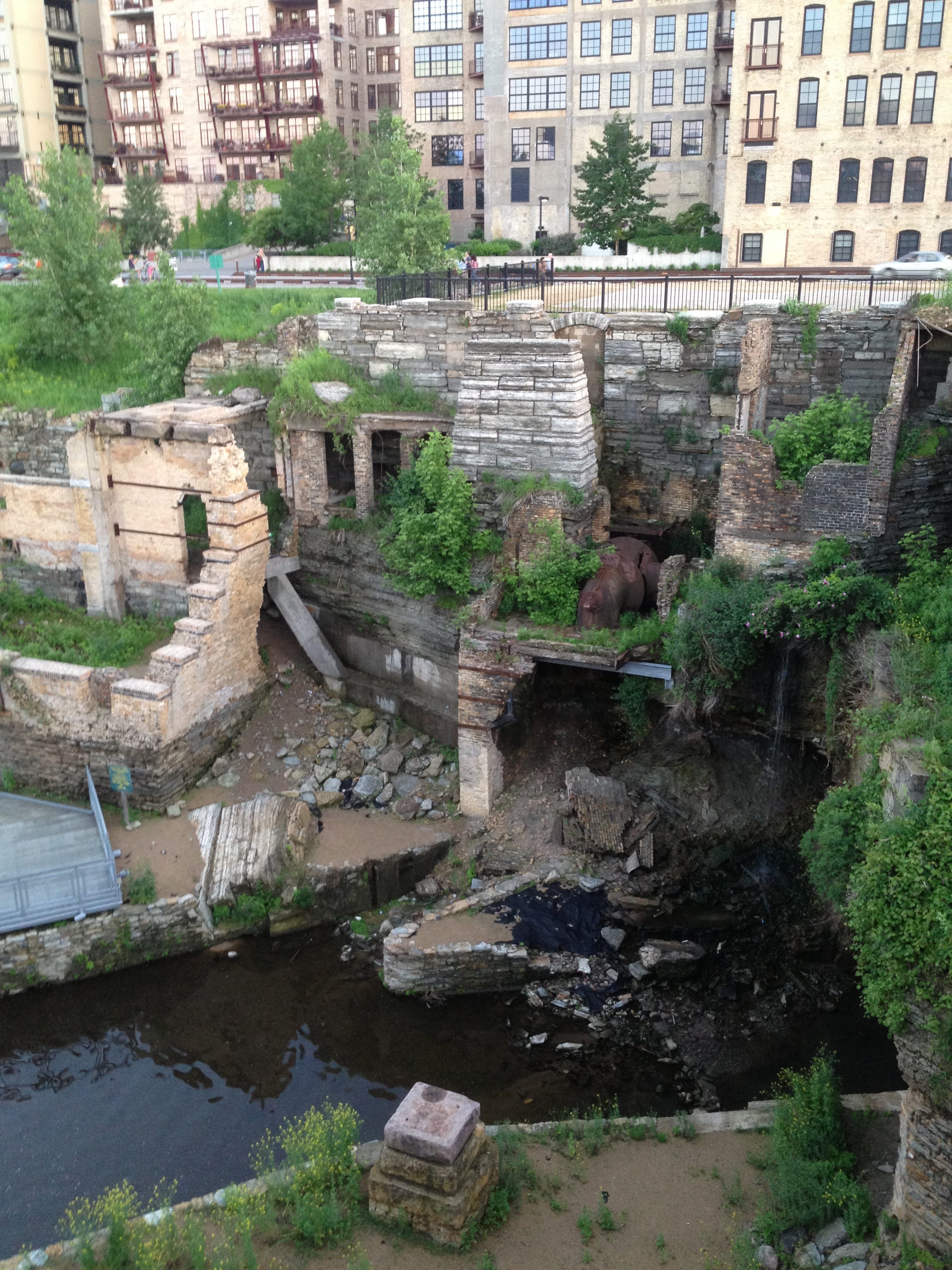
The City as Forest
When you have enough human beings working and building together, the City becomes a special gathering place for things that can connect us to universal Beauty:
The truly precious things are those forming ladders reaching toward the beauty of the world…numbered among them are the pure and authentic achievements of art and science…they include everything that envelops human life with poetry through the various social strata. Every human being has at his roots here below a certain terrestrial poetry, a reflection of the heavenly glory, the link, of which he is more or less vaguely conscious, with his universal country. Affliction is the tearing up of these roots. Human cities in particular, each one more or less according to its degree of perfection, surround the life of their inhabitants with poetry.
I think of the Minnesota my friend Jenny lovingly describes, replete with Somali teas, summer swims, and sledding. As I draft this, it’s patrolled night and day by what feels like a continual hum of helicopters, and many people I know are unable to leave their homes out of fear. Citizens, undocumented, legally residing — it doesn’t seem to matter. It is a true affliction, and it is tearing up these long-tended root systems which have built our city, a whole forest-ful.
My small son and I bundled up and grabbed candles and handwarmers and walked up to the local park last weekend to mourn the loss of so much life during these past weeks. Yes, Renee Macklin Good and Alex Jeffrey Pretti. But we were also holding vigil I believe for something else; we were watching and waiting for that terrestrial poetry in a dark hour, signs of beauty in the midst of affliction. Through this trial we have become more conscious of that universal country to which our networks ultimately belong to and connect to. About 200 of us gathered and stumbled through Amazing Grace with frozen toes. We were one gathering of hundreds more. A quiet moment to look in each others’ faces and pray for supernatural peace. The next day would mean more driving of neighbor kids, delivering of groceries, sorting of shampoo, and watching from street corners over our neighbor’s constitutional rights.
Dig Around and Fertilize
You’ve probably heard the story of Jesus cursing the fig tree because it had no fruit. Rather hard on the tree, I always thought. But the Lord has just been to the temple and cleared out the people selling stuff with a whip, so my guess is that he’s still pretty ticked off at the barrenness of his holy habitation. But guess what? I found another fig tree that Jesus spares! It’s in a story he tells:
A man had a fig tree growing in his vineyard, and he went to look for fruit on it but did not find any. So he said to the man who took care of the vineyard, “For three years now I’ve been coming to look for fruit on this fig tree and haven’t found any. Cut it down! Why should it use up the soil?”
“Sir,” the man replied, “leave it alone for one more year, and I’ll dig around it and fertilize it. If it bears fruit next year, fine! If not, then cut it down.”
I love this man. There has been a kind of desperation in the air which feels end-of-the-worldy around here. It doesn’t seem to hinge on a particular political point of view, though people may read the signs very differently from one another. But the final point I’d like to drive home is that the fig tree has not been cursed, uprooted or cut down — yet. We yet have time. But we must change our ways. The axe is truly laid to the root.
I’m not really talking about all that fraud that needs addressing, or violent foreign-born criminals, or MAGA influencers or what have you. I mean looking squarely and bravely at our very own hearts. How quick we are to lay the fault at the feet of someone else, and it’s the person wearing the opposite color (red or blue). But it’s time to own up to our own poop, break out the trowel and turn it into fertilizer. What do I mean?
Start a conversation with the family member who votes the opposite of you. Ask a question and just listen. Say uh-huh and ok and really, why is that? and process what they say, instead of silently marshaling all of the Internet resources you’re going to bombard them with once they shut up. Make it a point to not score points. LISTEN. If you live in the city, talk with your friend in the burbs and vice versa. Ask how these times have felt to her. We all carry fears that we deeply long to lay down — too often we end up laying the blame at the feet of someone else who’s just as frightened. You voted for him. You for her. You spoke too loud. You were too silent.
If you’re a Very Online kind of person, try an algorithm trade with a trusted friend who probably relies on different news sources than you do. Or even better? In place of constant news for a while, read a good novel or some history. Not only is it a breath of fresh air, it’s also a much better way to get to know humans. (I read a book about Frank Church and the Church Committee last year and it revolutionized how I saw the current political climate. I also read Our Mutual Friend by Dickens a couple months ago and absorbed some much needed empathy and a sense of humor.) Not only is our city the difficult country we’ve been given to love; so are the people. We can all be insufferably difficult to love!
A Final Warning
I will end on a rather serious note, and that is that the dark is becoming very dark and the light very light. When this particular immigration surge in Minneapolis came about, it was marked by a cruelty and lawlessness which I do believe would upset most people if they saw it. Really saw it. We must speak the truth about these things, as this conservative judge and this pastor and many, many others have. And why is this?
Even if you don’t believe that every person from Greg Bovino to Liam Ramos is made in the image of God, if you are American you do subscribe to this:
We hold these truths to be self-evident, that all men are created equal, that they are endowed by their Creator with certain unalienable Rights, that among these are Life, Liberty and the pursuit of Happiness.--That to secure these rights, Governments are instituted among Men, deriving their just powers from the consent of the governed, --That whenever any Form of Government becomes destructive of these ends, it is the Right of the People to alter or to abolish it…
This is the civic reason that many people hold those signs, blow those whistles, deliver food, wire money to detainees, etc. But if you also want the philosophical and eternal reason, you can get it from (of course) Simone. It’s in the form of a warning, the sober words of which I will leave us all to ponder:
But to destroy cities, either materially or morally, or to exclude human beings from a city, thrusting them down to the state of social outcasts, this is to sever every bond of poetry and love between human beings and the universe. It is to plunge them forcibly into the horror of ugliness. There can scarcely be a greater crime. We all have a share by our complicity in an almost innumerable quantity of such crimes. If only we could understand, it should wring tears of blood from us.
Dear ones, let us remember the sojourner in our midst.
There is nothing I can add. You (and Simone) said it all so articulately❤️In tears.
Heart-wrenching. Needed words in a dark time, especially for us in the Minneapolis area. And if we call ourselves people of faith, there is an implicit call to love the sojourner (foreigner) among us, to love and care for the weak and needy, to feed the hungry among us. It is simply having and showing compassion. It is for the sake of the Name.