
Summer --
It’s like the world’s best story.

I was a latecomer to the TV show Phineas and Ferb but the way I see it, I stumbled into its orbit just in time to raise my boys properly. Not only is this show uproariously funny, but I’ve had a hunch for a while that it was saying much more about reality than it let on. I finally had a chance to articulate some of those ideas in a new essay published by Veritas Journal this past week. Here’s a taste of what makes these cartoon brothers worth paying attention to:
They prize summer above all else. Why? It is full of potential, and unfinished narratives, embodied experience, and sensory experience with others. “Summer” becomes a stand-in for a life well-lived in the particulars. It’s making-do with the odds and ends we’ve been given, bucking convention, and rising to the occasion, as the final portion of the theme song expresses so well:
We’ve got our mission and some pliers
Yogurt, gumballs and desire
And a pocketful of rubber bands
The manual on handstands
A unicycle, compass
And a camera that won’t focus
And a canteen full of soda
Grab a beach towel
Here we go!It’s easy to reduce this approach down to “living in the moment” or some other instagram-worthy caption, but Phineas and Ferb have a bit more to offer us under the surface. They may be out of school, but they are remarkably attuned to a deeply satisfying philosophy of learning. They would never say this, of course – the whole point is that they’re immersed. Aside from a great side gag about existentialist trading cards (“Kirkegaard. Came with the gum.”) the brothers are blissfully unaware of their own phenomenological positioning. It’s up to us to stand back for just a moment in order to understand how truly revolutionary their winsomeness and wisdom is from an epistemological perspective.
In the show, “school” represents a kind of narrow way of life from which kids are liberated. We all know that exhilarating feeling near the end of May, but except for students and career teachers, this tends to fade over time and a new anxiety about “what will we do with the kids over the summer” takes over. Frantic parents scour the camp offerings, sweat over waiting lists, and try like the dickens to make sure their kids are having a “good time,” all the while needing to balance their own work lives. It is undoubtedly difficult to manage and childcare over the summer is a very real necessity for most families in one capacity or another. Regardless of family schedules, however, there is a distinct need to rediscover what leisure is, and also what its connection to learning is.
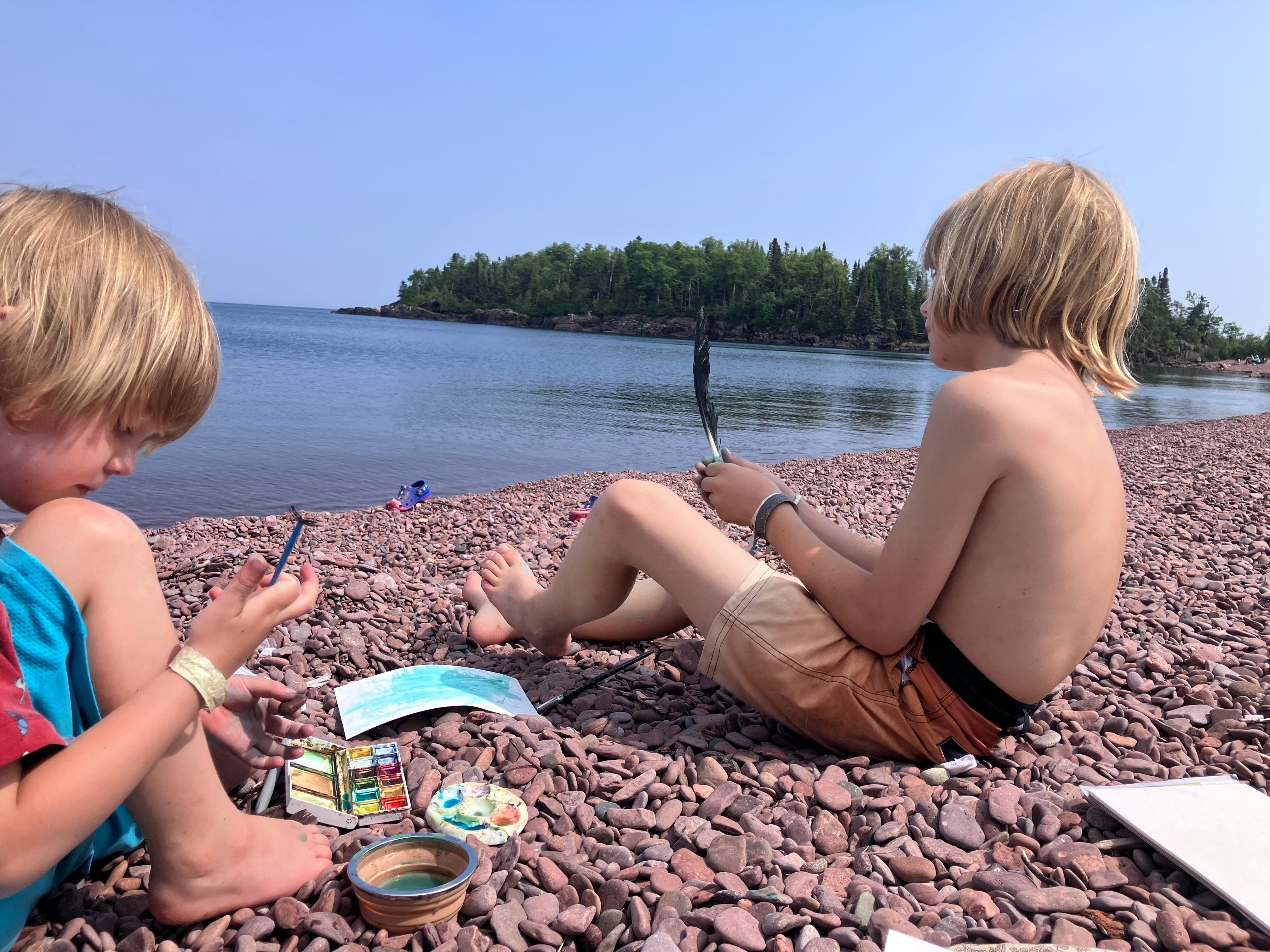
One of the recommendations I make at the end of the article is to watch Tao Ruspoli’s documentary Being in the World. After I wrote this, I thought I should probably follow my own advice and rewatch it. My sons were on the couch next to me (as one of summer’s many joys is staying up late for movies!) They sat at rapt attention while a master Japanese carpenter shaved a piece of wood in one long, curly strip and a juggler handled ever more balls, clubs, and even knives. Once the philosophers came on to explain what was going on from an intellectual persepctive my smaller son got out a set of blocks and started being-in-the-world with his body, while the taller one tuned in and tried to absorb with his brain. They are five years apart in age, but that split in activity was at least as interesting to me as the film itself.
But everybody in the family loved Manuel. When Manuel sings flamenco with his guitar in a lover’s embrace, well — everyone listens.

So. It is that moment in early August, when we start feeling the tug of school schedules and logistical labyrinths, but linger with me for a while. Let’s absorb the goofy yet surprising wisdom of a Cartoon Network phenomenon. (You can read all my thoughts on it in full at The Phenomenology of Phineas and Ferb.) Let’s have a couple more late nights around the fire with the guitar and marshmellows (or a glass of wine!) And even after Labor Day comes and goes, let’s practice remaining as liberated from School as possible, at least in the narrow sense, remembering what Peter, Susan, Edmund and Lucy did once the White Witch had been defeated:
And now, as you see, this story is nearly (but not quite) at an end. These two Kings and two Queens governed Narnia well, and long and happy was their reign. At first much of their time was spent in seeking out the remnants of the White Witch’s army and destroying them, and indeed for a long time there would be news of evil things lurking in the wilder parts of the forest — a haunting here and a killing there, a glimpse of a werewolf one month and a rumour of a hag the next. But in the end all that foul brood was stamped out. And they made good laws and kept the peace and saved good trees from being unnecessarily cut down, and liberated young dwarfs and young satyrs from being sent to school, and generally stopped busybodies and interferers and encouraged ordinary people who wanted to live and let live.
-from The Lion, The Witch, and the Wardrobe by C.S. Lewis.
Happy end of summer, and its continuation — in all the deeper ways.