
A Few Good Tools
Towards Conviviality.

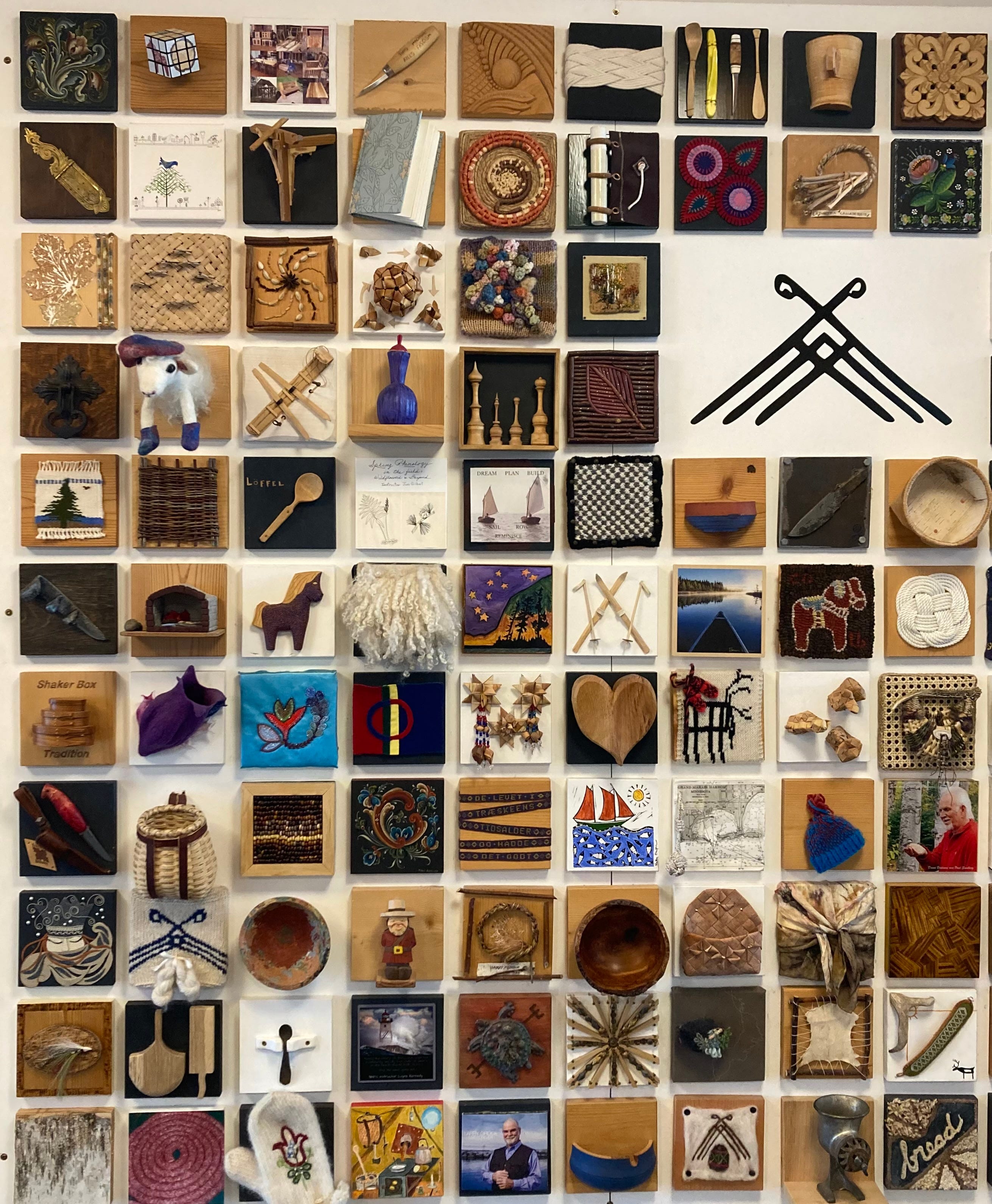
This is going to be a bit different than the essays I usually write. I want to start a conversation about which life practices lead to Conviviality. If you don’t know what that means, you’ll understand more in a moment. By the way, for those of you who prefer the simplicity of reading my newsletter within your email and not jumping onto the wider world of the Substack website, I sympathize. Sometimes an emailed missive feels much more convivial than a comment on a blog! I would still love for you to be part of the conversation if you want, so I invite you to respond by email. I’ll be going into some detail about my own habits, and I’d love to hear about yours. Pull up a chair.
Conviviality
I’m getting this rich and lovely word from Ivan Illich who has been turning my world upside down for about a year now. For starters, here’s what he means by it, plus its relationship to tools:
A convivial society should be designed to allow all its members the most autonomous action by means of tools least controlled by others. People feel joy, as opposed to mere pleasure, to the extent that their activities are creative, while the growth of tools beyond a certain point increases regimentation, dependence, exploitation, and impotence. I use the term “tool” broadly enough to include not only simple hardware such as drills, pots, syringes, brooms, building elements, or motors, and not just large machines like cars or power stations; I also include among tools productive institutions such as factories that produce tangible commodities like corn flakes or electric current, and productive systems for intangible commodities such as those which produce “education”, “health”, “knowledge”, or “decisions”. I use this term because it allows me to subsume into one category all rationally designed devices, be they artifacts or rules, codes or operators, and to distinguish all these planned and engineered instrumentalities from other things such as basic food or implements, which in a given culture are not deemed to be subject to rationalization. School curricula or marriage laws are no less purposely shaped social devices than road networks.
When I read this last December, I immediately began making an inventory of tools in my life which meant anything from a system (elementary school for my kid) to a physical implement (an electric toothbrush). Hmph. An inventory? Is that also a tool I’ve unconsciously been handed down by history as well? I wanted to cogitate a bit on whether they led to good things or not.
I had thought about this question under different terms several years ago when we as a faculty read Wendell Berry’s essays on agriculture alongside a book by a futurist and transhumanist. It was so long ago that I would have to dig around in quite a few cardboard boxes to find the actual texts but I remember being struck by the truth that Wendell Berry shared about the very first tools. He said that the first person to take a stick and dig into the ground altered the earth forever. (Not to mention the Wi-Fi and AI-directed ploughs of “Smart” agriculture then.)
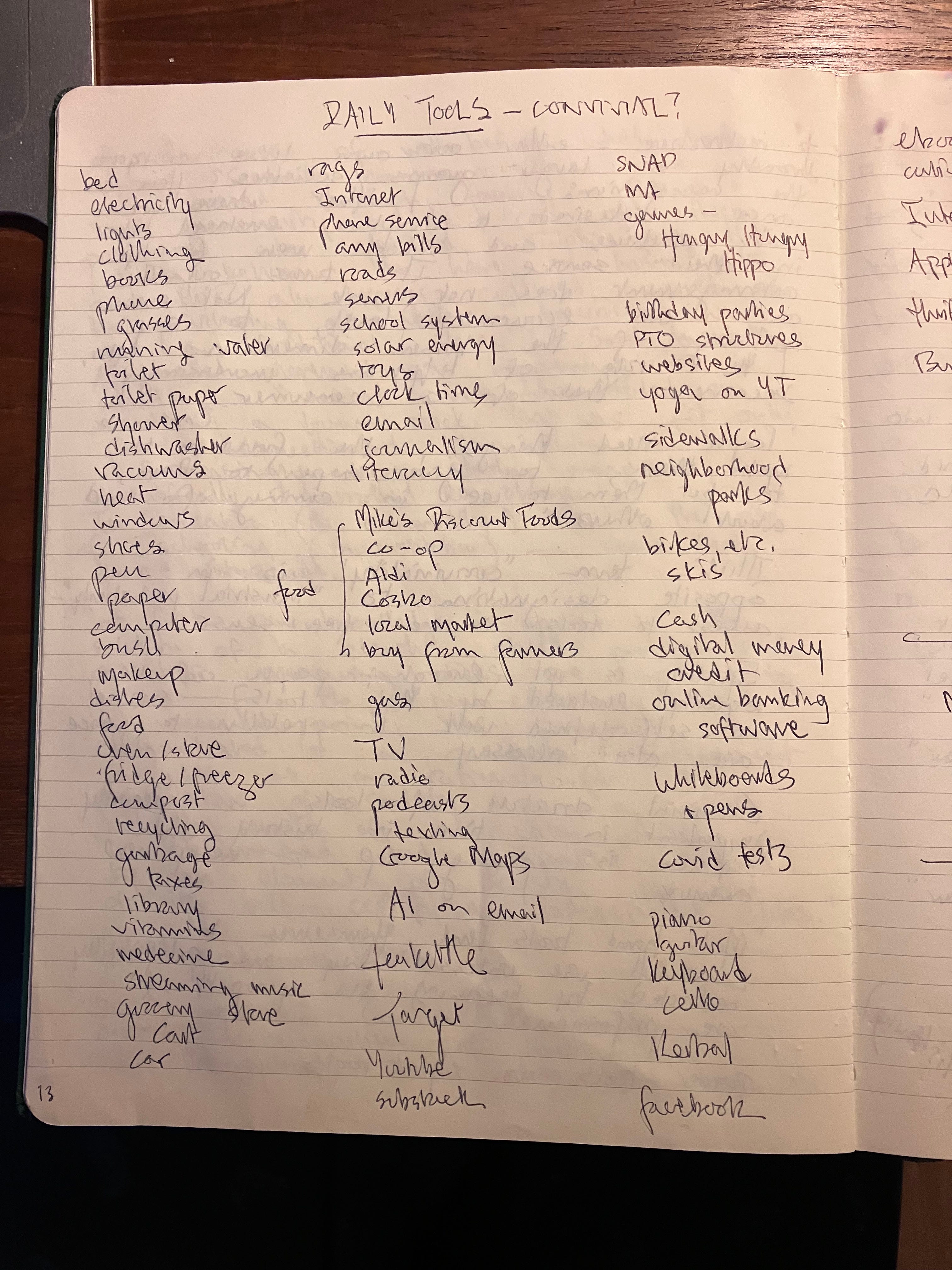
I don’t want to create a false dichotomy of “convivial” and “non-convivial” tools, as if it’s even that simple. I can’t imagine Illich would appreciate that. It’s not as if we can do a Marie Kondo-esque cleanse of all that is not convivial and live some kind of perfect life. It involves a lifetime of negotiation. I think what’s helpful here is to be awakened, in the good old-fashioned cave-of-Socrates sense, that we ought to carefully consider the things we take up. Text threads, church calendars, board games, candles, watercolor paints, public school, electric coffee grinder, binoculars, Facebook, the public library, Google maps, birthday parties, whiteboards. Why do they matter? Here’s Illich again in the same passage:
Tools are intrinsic to social relationships. An individual relates himself in action to his society through the use of tools that he actively masters, or by which he is passively acted upon. To the degree that he masters his tools, he can invest the world with his meaning; to the degree that he is mastered by his tools, the shape of the tool determines his own self-image. Convivial tools are those which give each person who uses them the greatest opportunity to enrich the environment with the fruits of his or her vision. Industrial tools deny this possibility to those who use them and they allow their designers to determine the meaning and expectations of others. Most tools today cannot be used in a convivial fashion.
It’s really too bad that the word “tool” has taken such a negative turn. I mean, you’d never look at Joshua Bell wielding his three-hundred-year-old Stradivarius and intone wow, what a tool. Because of unfortunate linguistic developments, this would not convey at all. No. But when Beatriz Aguerrevere (the best piano teacher in the whole world) took her wide-eyed junior high student to the front row at the orchestra to see her pal from conservatory wield that sucker (yes, I still can’t believe my luck) I was spellbound. Instruments and instrumentalization are worlds apart, of course. Make me an instrument of your peace says dear old Saint Francis. Or as Simone Weil puts it:
To be only an intermediary between the uncultivated ground and the ploughed field, between the data of a problem and the solution, between the blank page and the poem, between the starving beggar and the beggar who has been fed.
There’s a way in which the skillful wielding of a tool involves a kind of becoming one with it. Just as when you see a really great seminar leader guide a discussion (I’m looking at you, Jon Balsbaugh). Or a master carpenter size up a project with a detached and yet loving eye. Or a mother of five lean down and whisper something into their eldest’s ear, while nursing another and redirecting a third simultaneously to use the potty. The marriage of body and craft is notable, and excellence of this sort always deserves recognition.
Hence my long meditation on whether the practices and implements that make up my days lead to actions worthy of such praise. I am still on this quest to discern. But I will highlight four such Tools which I have either re-discovered or happened upon for the first time this past year. I actively invite (beg!) for comments in the section below about the ones that you find lead to flourishing or Conviviality.
So, here’s mine.
1. My Watch, or Submitting to Time.
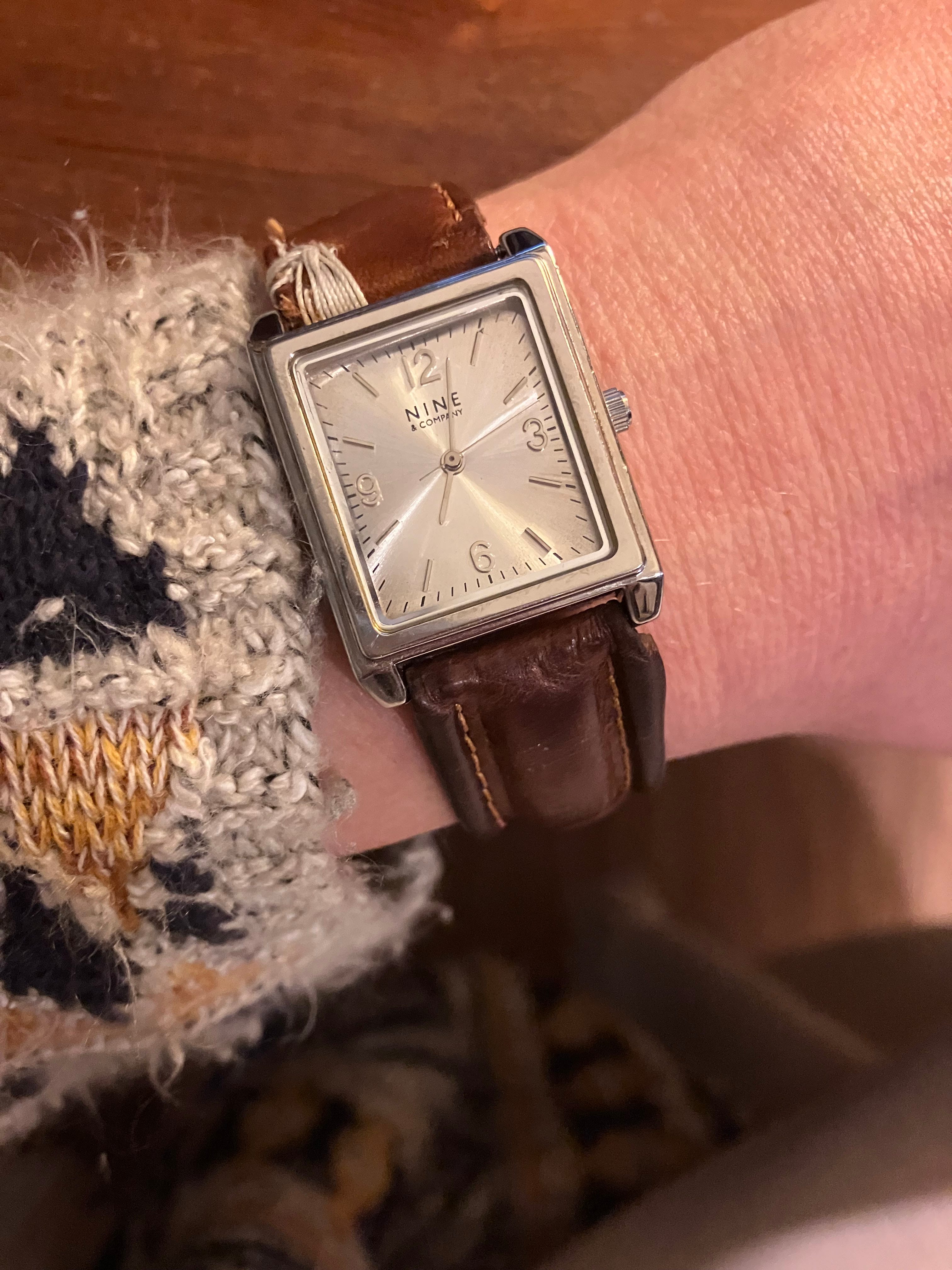
Recently I wrote about the joy I felt in the discovery of changing my own watch battery. It made me feel sheepish knowing that such a basic task had seemed beyond my grasp for so many years, but better late than never, right?
Getting it up and running felt like a funny little betrayal of my former self. Twenty years ago I prided myself in being the kind of person who lost track of time and wearing a watch felt confining, like I was handcuffed to Clock Time which I didn’t really “believe” in. How on earth did you make it to appointments? you might ask. A bit of luck and goodwill from those around me, probably. Back then you could almost always look up at a wall in a public space and find a clock as well, if necessary. You all know what happened next. The iPhone! Suddenly we were all hyper aware of the time, and a whole host of other things bundled into that device.
So despite my past attitude towards watches I decided that they might present a better, more convivial alternative. It’s still considered rude to look at your watch during a conversation you might say. Yes, you don’t do that if you want to remain fully present. But how much worse to pull out your phone? Or even if I’m alone, just checking the time draws me back in. So, I dug out the watch my husband gave me lo these decades ago and got it up and running.
Plus, that little tick tick? It doesn’t feel mechanical anymore, but homey. It’s a real actual click — not a recording of one embedded in the software of an app. Aesthetics do play a huge part in the conviviality of a tool, I think.
2. A Small Notebook: Redirecting my Urges.
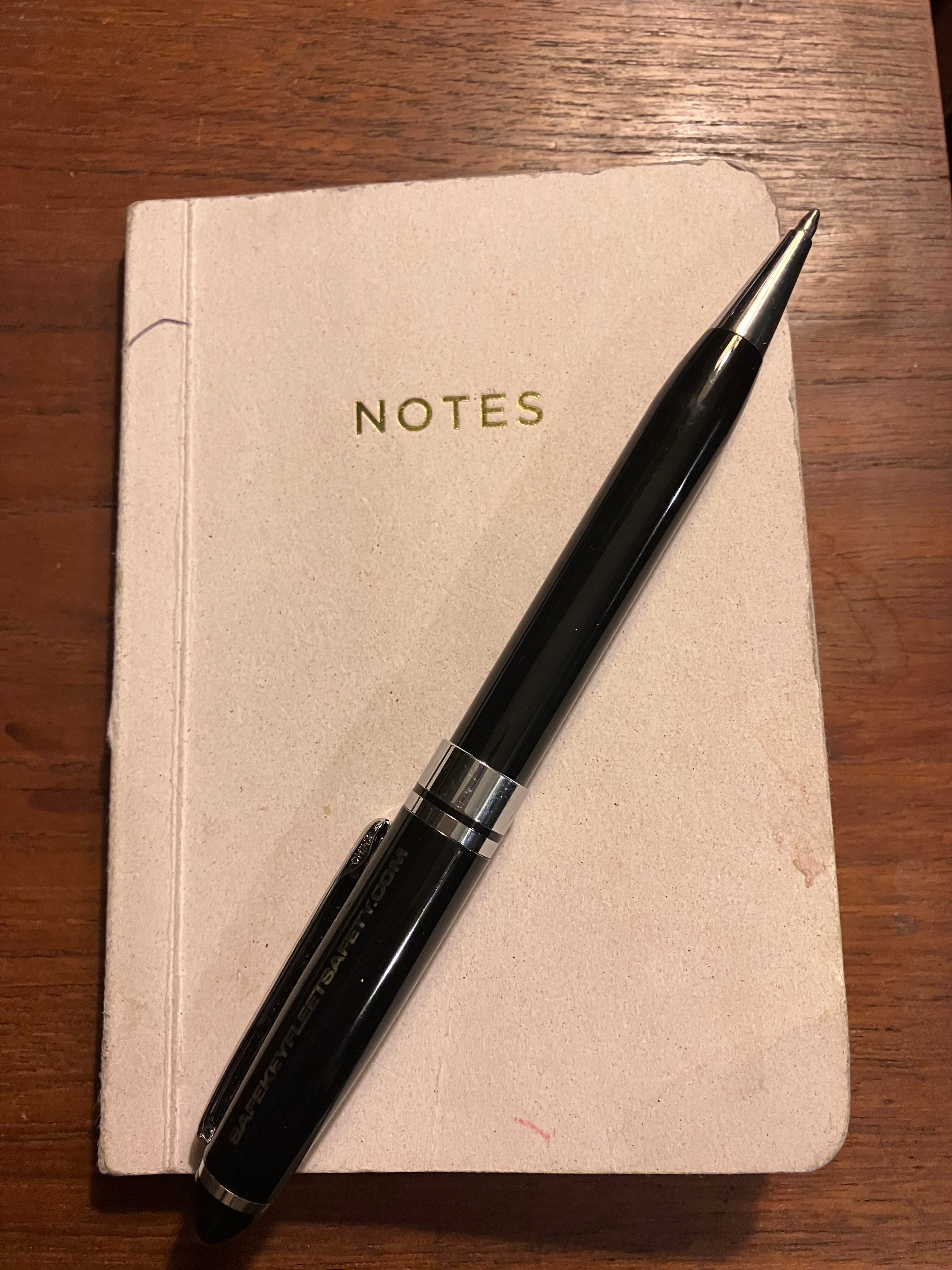
Related to the above project of relying on my iPhone less, I also dug out a small notebook around the same size and keep it on top of the phone with a pen nearby. Throughout my day I was getting the twitch to check my phone. As Illich said above, to the degree that he is mastered by his tools, the shape of the tool determines his own self-image. My self-image and physical habits were now successfully established by Apple and I set out to destabilize that. Whenever I get the urge to pick up my phone, whether it’s to “just check on things” or to look up something specific, my hand falls first on the notebook where I keep a simple checklist of online errands. (This is also helping me remember to do things, as the usual iPhone experience is very scattering to me.) This little notebook is really changing things. Sometimes when I leave the house now, I just leave my phone at home (gasp!) and bring the notebook.
3. Local Rink, Local Politics.

On the week of the national election the news spread like fire. It didn’t have anything to do with senate seats being flipped or exit polls. It had to do with the neighborhood ice rink. Some observant soul had noticed that the hockey rink boards hadn’t been delivered and had inquired about this, being that our park is absolutely swarming with humans on every thinkable ice conveyance from December to March — from baby strollers to hockey skates, to broomball shoes. All there to play. It turns out, the Minneapolis Parks and Recreation board had proposed defunding our park’s ice rinks in their most recent budget. Their reasons were short-sighted at best.
So armed with pitchforks (allez les citoyens!) a bunch of families, hockey coaches, broomball players, and other concerned parties showed up at the public meeting and scrawled their names on the agenda. Person after person came up to testify to this nexus of community: “Fire and Ice” nights featuring bonfires and free smores, the warming house with free skates of all sizes to borrow, the only affordable youth hockey league which services a side of town that needs a boost, “Soup & Skate” afternoons, birthday parties, and more. It brings together people of all walks of life like few other public services I’ve seen do. I couldn’t help but throw in the word Conviviality into my little speech. This ice rink is, in and of itself, a convivial tool, and so was the public meeting where we were gathered.
The park board sat rather muted after all of this, with few tells on their faces to speak of. But our local commissioner apparently is committed to seeing this through, and we’ve won the right for this coming year to some partial services. Onward, comrades!
4. The Ancient CD Collection: Redeeming the Commute.
What are these? Some months ago my kids found two heavy leather CD cases stuffed with discs from an entirely different era of our lives. Since our technologies had slipped over to streaming songs (along with those dang iPhones again) these had been relegated to a dusty shelf. But here they were, open to the wonder and scrutiny of two little tough critics. There were unspeakably dorky hangers-on from junior high (early Christian hip-hop, anyone?) along with some great rediscoveries, such as the early albums of 10,000 Maniacs, Jeff Buckley, U2, Santana…definitely all of an era. Lots of prog rock. And so much jazz. It does my heart no end of good to hear my 4-year-old’s voice asking from the back seat if I could please play Rush. The first time he asked, which was about 1,045 times ago, I had a my work is done here moment.
He’s asking from the back seat because at this point we don’t have a CD player attached to our stereo system in the house, but the car does. And so not only have we repurposed the Convivial Tool of compact discs, the long car commute to my son’s school, which has always bothered me for multiple reasons, now feels like it has a new purpose as well: enjoying good music together.
All right, now you, dear friends. Please share below about what kinds of tools you’ve found that encourage Conviviality. (Or conversely, which ones definitely don’t!).
Also, if you are interested in thinking about this conversation more and with even more people, it was without a doubt inspired at least a little by
and at and . They continue to catalogue a myriad ways in which people far and wide are consciously choosing their Tools. Thank you both for this gift!